BUDGET: 10 crore INR and above (USD1.48 million and above)
Project Overview
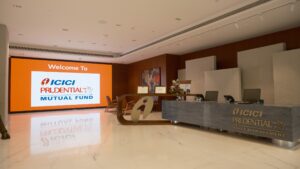
ICICI Prudential AMC engaged SI to create an integrated AV environment for its Mumbai workplace. The project covered 22 standard meeting rooms, three divisible rooms, an EDR boardroom, executive cabins, training and media spaces, reception, a cafeteria-cum-town hall, recreation areas, lounge and terrace.
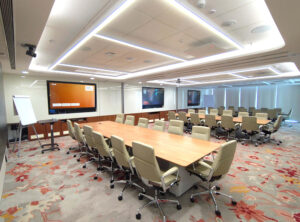
Each space supported a different style of interaction while remaining familiar and easy to operate. Standard rooms enabled video collaboration, wireless presentation, display sharing and one-touch meeting join. The largest divisible room added partition sensing, multiple displays, presenter tracking and beamforming microphones for separate and combined use.
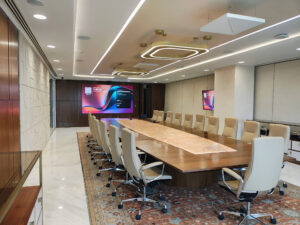
The EDR boardroom formed the technical centrepiece, with two 136-inch fine-pitch LED displays, six beamforming ceiling microphones and intelligent multi-camera coverage. Voice-activated switching selects views according to who is speaking, reducing manual operation.
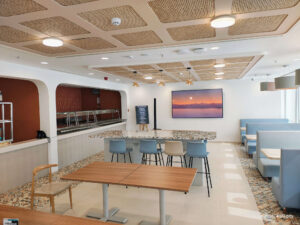
The cafeteria-cum-town hall uses a 98-inch main display, three supporting displays, networked AV distribution and portable line-array audio. Actis also integrated room scheduling, lighting, shade and curtain controls and cloud-based monitoring, creating a consistent workplace experience while giving IT greater visibility of AV performance.
What did the client want to achieve?
ICICI Prudential AMC wanted its Mumbai workplace to support everyday meetings, leadership discussions, client presentations, training, town halls and hybrid collaboration.
Rooms of different sizes needed to feel consistent and simple to use. Employees moving between meeting rooms and executive spaces had to be able to join calls, share content and begin presentations without learning a different system in each location.
Divisible rooms also had to work as separate spaces or one larger environment, with the AV system responding to the room configuration. Larger spaces required clear speech pickup, strong visual communication and intelligent camera coverage so local and remote participants could contribute effectively.
The cafeteria-cum-town hall needed to support internal communication and larger gatherings through multiple displays and flexible sound reinforcement.
The workplace also had to be easier for IT to support. Room schedulers simplified booking, while centralised cloud monitoring improved visibility of AV endpoints and system performance.
Scope of work your company was involved in
SI designed, supplied, integrated, programmed and commissioned the workplace AV ecosystem across meeting, executive, training and employee experience spaces.
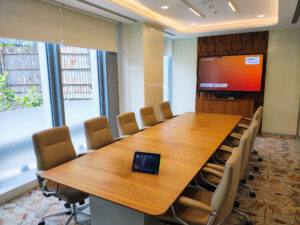
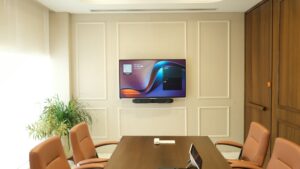
Across 22 meeting rooms seating four to nine people, Actis created a consistent experience for video meetings, wireless presentation, display sharing and one-touch join. Eight-seat rooms added 65-inch UHD displays, all-in-one video bars and occupancy sensing.
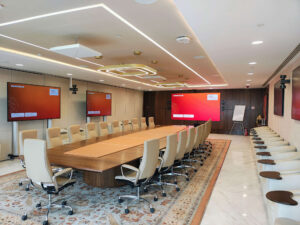
Three divisible meeting rooms were also delivered. The largest uses a 110-inch primary display, three 86-inch supporting displays, presenter-tracking and PTZ cameras, six beamforming ceiling microphones and partition sensors, allowing the AV system to respond to separate or combined use.
The EDR boardroom includes two 136-inch fine-pitch LED displays, two video conferencing systems, six beamforming ceiling microphones and voice-activated multi-camera switching.
The cafeteria-cum-town hall combines a 98-inch main display, three 55-inch supporting displays, networked AV distribution, portable line-array audio, streaming and dedicated control.
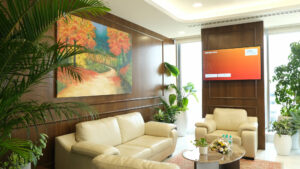
The wider scope covered executive cabins, training and media spaces, reception, recreation areas, lounge and terrace, with room scheduling, lighting, shade and curtain controls and cloud-based monitoring.
What key challenges were faced?
The main challenge was creating a consistent user experience across many room types without forcing every space into the same design.
Standard rooms needed simple video meetings, wireless sharing and familiar controls. Divisible rooms were more complex because displays, cameras, microphones and collaboration systems had to support separate and combined configurations. Any mismatch between the physical partition and AV setup could interrupt meetings or require support.
The EDR boardroom presented a different challenge. Two large LED displays and eleven cameras had to support leadership meetings and high-impact presentations while giving remote participants a clear view of whoever was speaking. Manual camera selection would have increased operational effort and made conversations less natural.
The cafeteria-cum-town hall needed to support everyday use and larger gatherings, with content distributed across several displays and flexible audio for town halls, presentations and internal events.
Larger meeting and training spaces also required clear speech coverage, including voice lift where needed. Across the workplace, Actis had to balance room-specific performance, standardised operation, flexible configurations and centralised management.
How were those challenges resolved?
SI created a standard collaboration foundation, then added room-specific technology where required.
Standard meeting rooms used a consistent combination of display, video collaboration and wireless presentation, making meetings and content sharing more familiar for users.
In the largest divisible room, partition sensors allow the AV system to respond to the room configuration. A presenter-tracking camera follows movement during training or presentations, while a PTZ camera provides wider coverage. Six beamforming ceiling microphones capture speech across the space without table microphones.
For the EDR boardroom, Actis combined two 136-inch fine-pitch LED displays with PTZ and intelligent cameras. Voice-activated switching selects suitable views according to the active speaker, while six beamforming ceiling microphones provide broad speech pickup.
In the cafeteria-cum-town hall, networked AV distribution feeds a 98-inch main display and three supporting displays. Portable line-array systems support town halls, presentations and internal events.
Selected executive spaces also integrated presentation, lighting, shade and curtain control. Room scheduling and cloud-based monitoring brought these environments together as one workplace ecosystem.
How has your work helped the client?
The project has given ICICI Prudential AMC a workplace where different rooms support different activities through a familiar operating experience.
Employees can enter a standard meeting room, join a video call, present wirelessly and share content through the same core tools. This reduces the learning curve and supports faster meeting starts.
Divisible rooms provide greater flexibility by operating as separate spaces or one larger environment, with the AV system responding to the room configuration.
In the EDR boardroom, two fine-pitch LED displays improve presentation impact. Voice-activated multi-camera switching and beamforming microphones help remote participants follow discussions more naturally without continuous manual camera control.
The cafeteria-cum-town hall strengthens internal communication through four displays and portable line-array audio suited to different gathering formats.
Room scheduling simplifies booking, while centralised cloud monitoring gives IT greater visibility of AV endpoints and room performance.
Together, these improvements support everyday collaboration, executive communication, flexible space use, employee engagement and more proactive technology management.
What are you most proud of about the project?
We are most proud of creating a consistent workplace experience while respecting each room’s purpose.
Across 22 meeting rooms, users follow a familiar approach to video collaboration, wireless presentation and one-touch join. The design then scales for more demanding spaces. The largest divisible room uses partition sensing, multiple displays, presenter tracking and beamforming microphones for separate or combined use.
The EDR boardroom is the strongest example. Two 136-inch fine-pitch LED displays create a high-impact visual environment, while six beamforming ceiling microphones capture discussion across the room. Eleven cameras provide extensive coverage and voice-activated switching selects views according to who is speaking, giving remote participants a more natural view of leadership conversations.
The cafeteria-cum-town hall applies the same principle to employee communication. Networked AV distributes content across four displays, while portable line-array audio supports different event formats.
Rather than repeating one room design, SI created a centrally managed ecosystem for meetings, executive communication, training and large employee gatherings.
VIDEO link of the project space: